berlin stromausfall Introduction: When the lights go out in the capital of the world
On a cold winter's day, Berlin – Germany's throbbing capital, a symbol of technological progress and European resilience – experienced something extremely disturbing: widespread darkness. In our hyper-connected 21st century, where electricity is as basic as air, a major power outage represents more than just an inconvenience; There is a crack in the normal fabric of life. The recent "storm" that occurred in the southwestern districts of Berlin, affecting 50,000 homes and 2,000 businesses, was a pure technical failure. It revealed the complex vulnerabilities of our urban infrastructure and launched an early, collective search for answers: “Berlin Stormfall” – three words that spread across search engines and social media platforms, becoming a digital lifeline for thousands of people seeking information, reassurance and a timeline to normalcy.
This blog post sheds in-depth light on this phenomenon, moving beyond the immediate headlines to explore the technical causes, social response, the historical context of Berlin's energy, and the deeper questions that arise from such crises about our modern dependence on electricity. We will trace the arc of the blackout from the first flicker to the restoration work, and analyze why people search in this way, what it means for a city to stop, and what lessons Berlin – and any modern city – should learn from the day in the dark.
Chapter 1: The Blackout - A Timeline of Darkness
The moment the grid went silent
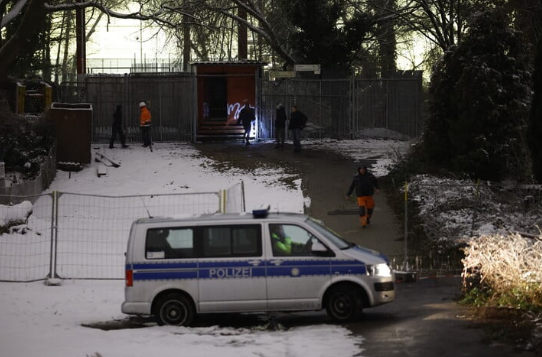
It began not with a bang, but with a pause – the hum of instruments disappeared, the screens went black and there was a sudden absence of artificial light. On that winter morning, the residents of the prosperous, green southwestern districts of Lichterfelde, Zehlendorf, Wannsee and Nicolausi were transported back to the pre-industrial era. The outage was not a rolling brownout, but a severe, localized collapse. The first reports came in via battery powered devices: no power, no heating, no internet for many.
the extent of the crisis
The numbers became increasingly clear, painting a picture of a significant crisis:
45,000 to 50,000 homes were thrown into darkness.
Nearly 2,000 businesses, from corner bakeries to tech startups, were forced to close.
Impact on critical infrastructure: Traffic lights were switched off, leading to congestion and danger. Freezing temperatures freeze vital electric heating systems, raising urgent concerns about hypothermia for vulnerable people. Public transport was disrupted and mobile networks were overloaded as people searched for information.
Reasons: from mistake to crime
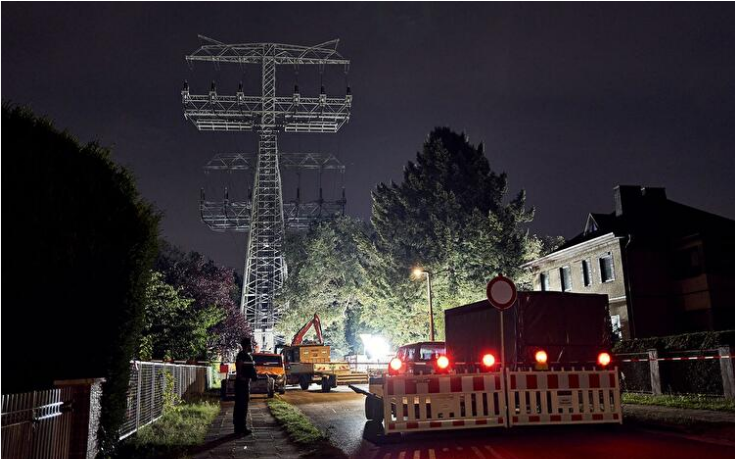
The utility company, Stromnetz Berlin, immediately identified the epicenter of the earthquake: a fire in a large power station. However, the story took a dramatic turn when the police hinted at suspicion of arson (Brandstiftung). This changed the incident from an accidental technical failure to a possible act of sabotage. High-voltage cables, the arteries of the city, were seriously damaged by deliberate fire, which greatly complicated the repair work. The question "why" added a layer of anxiety and evil to the practical problems of cold and darkness.
Chapter 2: Berlin's beating heart – a historical and technological look at the web
To understand the impact, one must understand the system that failed.
Unified Grid of a Divided City
Berlin's energy infrastructure reflects the wounds and triumphs of its unique history. The urban grid was once physically divided during the Cold War, with separate systems for east and west. Reunification required a major engineering feat – integrating two separate systems into a single robust network. Today, Stromnetz Berlin runs more than 34,000 kilometers of power cables, a vast and mostly hidden network that underpins the city's life. The south-western region affected by this blackout is supplied by critical high-voltage lines and substations that carry electricity for local distribution. The strike here is a strike at a critical pressure point.
Why are winter outages more dangerous?
Germany's modern warming is a double-edged sword. Although efficient and controllable, many heat pumps and electric heating systems are completely dependent on the grid. So winter blackouts aren't just about lighting; This is a rapid loss of thermal comfort and protection. This interconnection of energy systems (Energiewende – the transition to renewable energy – reinforces this interdependence) amplifies the consequences of failure.
Anatomy of restoration: why it takes so long
The audience's most frustrating question - "When will the power return?" - has a complicated answer. Repairing high-voltage infrastructure is not like resetting a circuit breaker.
Safety first: The fire-damaged site must be made electrically and structurally safe for the crew.
Assessment: Engineers must carefully assess the damage to transformers, switches and hundreds of meters of cable.
Typical parts: High voltage components are not stock items. they are
Chapter 3: Life in the Dark - Social and Psychological Effects
The prolonged blackout is a social experiment that reveals the layers of modern society.
immediate discomfort
The first layer is practical chaos: spoiled food in silent refrigerators, dead home office setups, inaccessible elevators, frozen pipes, and the eerie silence of a city without electronic noise.
deeper crisis
As the hours turn into days, more profound issues emerge:
Economic loss: For businesses, every hour they go offline results in lost revenue. For freelancers and remote workers, this is lost income. The total financial cost is in millions of euros.
Social Isolation: Without power to routers and phone chargers, digital connectivity – our primary social and informational link – fades. The elderly and those living alone are particularly vulnerable.
Health risk: Cold becomes the main enemy. Hospitals are switching to generators, but people who rely on home medical equipment face dire choices.
Community vs. anxiety: The event gives rise to both beautiful solidarity (neighbours checking in on each other, opening up community centers as heating stations) and increased anxiety from rumors and lack of information.
Information hunger: decoding search patterns
The increase in specific search terms is a map of the public psyche:
"Berlin Stromasfall" is a diagnostic tool - am I alone?
"Stromnetz Berlin Live Map" is an exploration of control and visualization.
"Do you want to join Storm?" (When will the power return?) is the main argument for a return to normality.
Searching social media represents a turn towards a collective "truth" gleaned from colleagues when official channels feel slow or incomplete.
This digital reflex is now a fundamental part of disaster response, putting pressure on utilities and officials to provide clear information
Chapter 4: Sabotage in the Shadows - The Arson Angle
The police's suspicion of arson adds a darker, complicated dimension. If proven, this moves the incident from the "accident" realm to the "assault" realm.
Motive? Could this be politically motivated extremism targeting infrastructure? Action of complaint from any person? Are you trying to cover up another crime? Uncertainty promotes fear among the public.
Vulnerabilities exposed: This highlights that beyond natural disasters and technical failures, our critical infrastructure is physically vulnerable to malicious acts. This leads to debate about security measures around grid stations and grid resilience.
Historical echoes: For Berlin, a city with a history of division and conflict, the attack on its integrated infrastructure feels symbolically powerful and particularly unsettling.
Chapter 5: Lessons from the Dark – Building a Resilient Future
Berlin will recover, but the blackout should serve as a catalyst for change, not just a repaired cable.
For grid operator (Stromnetz Berlin):
Invest in network hardening: This includes physical security, fire suppression systems and redundancies for critical nodes.
Revolutionize communication: Develop robust, low-bandwidth communication channels (such as SMS blasts) for power outages, real-time restoration maps, and clear, empathetic messages.
Microgrids and Decentralization: Promoting local neighborhood solar+storage microgrids can create "islands" of resilience that can be disconnected from the main grid and power critical community services during power outages.
For the city and authorities:
Public preparedness campaign: Citizens need clear guidance: bring a battery-powered radio, a power bank, non-perishable food, and know the location of designated "warming centers".
Dependence on critical infrastructure: planning needs to be considered