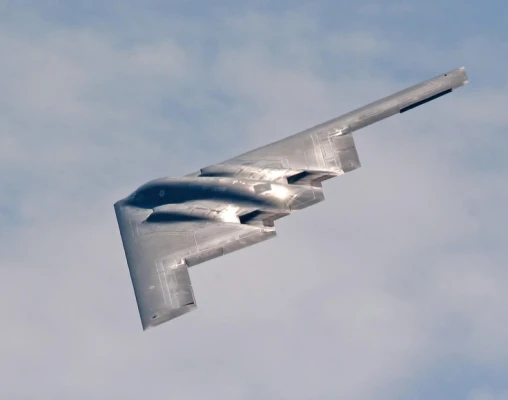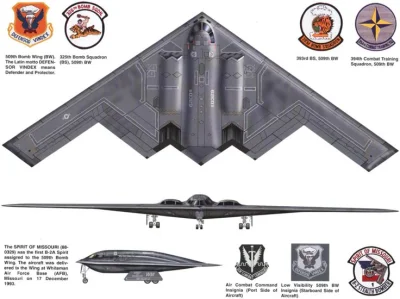
The Northrop Grumman B-2 Spirit is one of the few aircraft in the vast field of military aviation that inspires such awe, mystery, and sheer technological intimidation. Often referred to as the "Stealth Bomber," it is more than just a plane; it is a geopolitical statement, a silent sentinel, and an aerospace engineering marvel that seems to defy physics itself. This blog is about understanding why the B-2 is still a unique symbol of unmatched air power decades after its first flight, not just about its specifications, though we will discuss those.
The Birth of a Ghost: A Cold War Genesis
The B-2's story begins in the shadows of the Cold War. In the 1970s, the U.S. military faced a critical challenge: Soviet air defenses were becoming so advanced that traditional bombers faced near-certain interception. The answer was not to fly faster or higher, but to become invisible. The "Advanced Technology Bomber" program was born from this need, culminating in a flying wing design so radical it looked like something from another planet. The B-2’s first flight in 1989 was a moment that changed aviation history. Its unique, bat-like shape wasn’t just for show—it was the key to its ghostly presence.
Engineering the Invisible: The Art of Stealth
The B-2's story begins in the shadows of the Cold War. In the 1970s, the U.S. military faced a critical challenge: Soviet air defenses were becoming so advanced that traditional bombers faced near-certain interception. The answer was not to fly faster or higher, but to become invisible. The "Advanced Technology Bomber" program was born from this need, culminating in a flying wing design so radical it looked like something from another planet. The B-2’s first flight in 1989 was a moment that changed aviation history. Its unique, bat-like shape wasn’t just for show—it was the key to its ghostly presence.The B-2's multifaceted stealth, or "low observable" technology, is what really sets it apart. This is a comprehensive symphony of design and materials rather than a single trick.
The most remarkable feature is the flying wing. The B-2 presents a continuous, smooth shape that significantly lowers its radar cross-section (RCS) by removing the tail, fuselage, and other protruding surfaces. Its RCS is supposedly lower than that of a bird, to put it in perspective. Instead of returning to their source, radar waves can scatter due to this shape.
Radar-Absorbent Materials (RAM): Rather than reflecting radar energy, the B-2's skin is covered with unique, highly classified composite materials. This calls for careful upkeep because even a small panel misalignment can result in a radar "hot spot."
The B-2's story begins in the shadows of the Cold War. In the 1970s, the U.S. military faced a critical challenge: Soviet air defenses were becoming so advanced that traditional bombers faced near-certain interception. The answer was not to fly faster or higher, but to become invisible. The "Advanced Technology Bomber" program was born from this need, culminating in a flying wing design so radical it looked like something from another planet. The B-2’s first flight in 1989 was a moment that changed aviation history. Its unique, bat-like shape wasn’t just for show—it was the key to its ghostly presence.Acoustic Suppression and Infrared: Stealth is more than just radar. With serpentine inlets that conceal the compressor blades from radar and block heat signatures, the B-2's engines are tucked away deep inside the wing. It is very difficult for infrared missiles to get a lock because its exhaust is cooled and mixed with surrounding air before being released.
The "Whisper" in the Sky: The B-2 is incredibly quiet for its size, with a wingspan of 172 feet. Its eerie, phantom-like quality is further enhanced by its distinctive design and engine placement, which produce a sound signature that is frequently described as a distant whisper.
More Than a Bomber: A Global Reach, Global Power Projection
The B-2's technical specs are staggering: an intercontinental range of over 6,000 nautical miles, extended to a global reach with just one aerial refueling. It can carry up to 40,000 lbs of ordnance, from precision-guided nuclear bombs (like the B83) to conventional "bunker busters." But its true power lies in its mission profile: the ability to penetrate the most advanced, dense air defense systems on the planet and deliver a decisive blow on day one of any conflict.
This capability makes it the ultimate strategic deterrent. An adversary knows that there is no sanctuary, no command bunker deep enough, no air defense grid sophisticated enough to guarantee safety from the B-2. It provides the U.S. with a "first-day knock-out punch" option, a fact that profoundly shapes the calculations of potential foes.
The Human Element: The Elite Few Who Fly the Ghost
Flying the B-2 is not like piloting any other aircraft. Each of the 20 operational Spirits is assigned a dedicated crew of highly specialized pilots and maintainers. A typical mission can last over 30 hours, requiring supreme endurance and mental fortitude. The pilots, often dual-qualified as mission commanders, don't just "fly"—they manage a vast array of sensors, weapons systems, and stealth parameters. They train relentlessly for scenarios where a single error could compromise the entire mission. The bond between crew and machine is unique; they are the custodians of a multi-billion-dollar national asset and a cornerstone of nuclear deterrence.
Controversies and Costs: The Price of Being Unseen
The B-2 program has never been without controversy. With a total program cost estimated at over $2 billion per aircraft (including R&D), it is the most expensive bomber ever built. The end of the Cold War led to a drastic reduction in the planned fleet from 132 to just 21 aircraft (including the prototype). Critics argue this makes the fleet too small, too expensive to maintain, and a potential single point of failure.