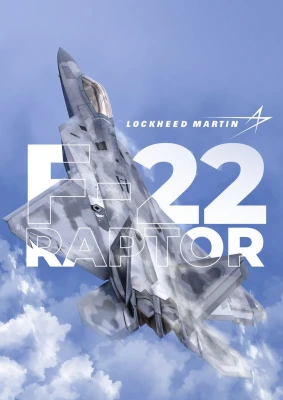
What is the F-22 Raptor?
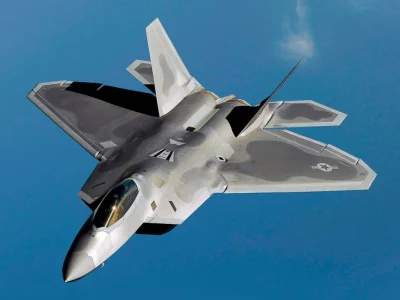
The F-22 Raptor is a fighter jet made by the United States. It was built in the 1990s and first flew in 1997. Its main job is to be the best at air dominance. This is a fancy term that means it is designed to win control of the sky. It makes sure no enemy planes can fly in an area during a battle. Think of it as the ultimate bodyguard for the sky, taking out threats before they even see it coming.
The U.S. Air Force is the only military in the world that uses the F-22. They stopped making new ones in 2011, so the ones flying today are very valuable. They are like rare, high-performance cars.
The Power of Stealth: Being Invisible
The F-22’s most famous trick is stealth. This doesn’t mean it has a magic invisibility cloak, but it’s close! The jet is built in a special way. Its shape, the materials it’s made from, and even the paint on it are all designed to make it very hard for enemy radar to see it.
Radar is like a giant flashlight that sends out radio waves to find objects in the sky. A normal plane reflects those waves back like a mirror, saying, “Here I am!” The F-22 is shaped to scatter those waves in all different directions or absorb them. To enemy radar, it looks like a small bird or even nothing at all. This lets the Raptor get very close to its target without being detected.
Super Cruise: Speed Without the Burn
Most fast jets can go supersonic—that means faster than the speed of sound—but they have to use a special fuel-guzzling engine setting called afterburner. It’s like putting your car’s pedal to the metal. You go fast, but you burn fuel like crazy and make a huge, hot flame behind you that’s easy to spot.
Agility: A Jet That Can Dance
The Raptor is not just fast in a straight line; it’s incredibly nimble. It has thrust vectoring. This means the nozzles at the back of its engines can move up and down. By pointing the engine thrust in different directions, the F-22 can turn, spin, and point its nose in ways that seem to break the rules of physics.
A pilot in a dogfight (a close-range air battle) can point the jet in a new direction almost instantly. This gives the F-22 a massive advantage against any other plane. It can dodge missiles and get behind an enemy before they know what happened.
The Pilot’s Brain: High-Tech Sensors
All this stealth and speed would be useless if the pilot didn’t know what was going on. The F-22 is packed with sensors that give the pilot a god-like view of the battlefield.
Radar: Its own radar is powerful and can track many enemy targets at very long ranges.
Sensor Fusion: This is the coolest part. The jet’s computers take information from the radar, infrared sensors, and other systems and blend it all together into one simple, clear picture on the pilot’s screen. The pilot doesn’t have to look at ten different dials. They see one display that says, “Here are all the friends, here are all the enemies, and here’s the best weapon to use.” It makes decision-making super
The Pilot’s Brain: High-Tech Sensors
All this stealth and speed would be useless if the pilot didn’t know what was going on. The F-22 is packed with sensors that give the pilot a god-like view of the battlefield.
Radar: Its own radar is powerful and can track many enemy targets at very long ranges.
Sensor Fusion: This is the coolest part. The jet’s computers take information from the radar, infrared sensors, and other systems and blend it all together into one simple, clear picture on the pilot’s screen. The pilot doesn’t have to look at ten different dials. They see one display that says, “Here are all the friends, here are all the enemies, and here’s the best weapon to use.” It makes decision-making super .
Why Don’t We Make More?
This is a common question. The F-22 program was very, very expensive. Each jet cost about $150 million! After the Cold War ended, the U.S. felt no other country had a plane that could match it. So, they decided to stop building F-22s and focus on the newer, more multi-role F-35 Lightning II, which is also stealthy but can be shared with allies.
The Raptor’s Role Today
Even though no new ones are being built, the F-22 fleet is constantly updated. It remains the king of air-to-air combat. Its main job today is to be the tip of the spear. In any major conflict, F-22s would be the first to enter hostile airspace. They would silently take out enemy air defenses, radars, and fighter jets, clearing the way for other, less stealthy planes like F-15s, F-16s, and bombers to do their jobs safely.
Conclusion: A Legend in the Sky
The F-22 Raptor is more than just a plane. It is a symbol of American engineering at its peak. It combines stealth, speed, brains, and agility in a way no other fighter jet has ever done. It was built for a war that never came, but its very existence has kept the skies safe for decades. It is a silent guardian, a technological marvel, and truly, the first superstar of the 5th generation of fighter jets.
So, the next time you look up at the sky and see a sleek, sharp jet (if you’re lucky enough to see one—they’re hard to spot!), remember the Raptor. It’s the closest thing we have to a real-life superhero jet.